Where to put them, how many, and when to swap
Pouches only work as well as where you put them. This is the guide we'd want if we were buying. Pick your space.
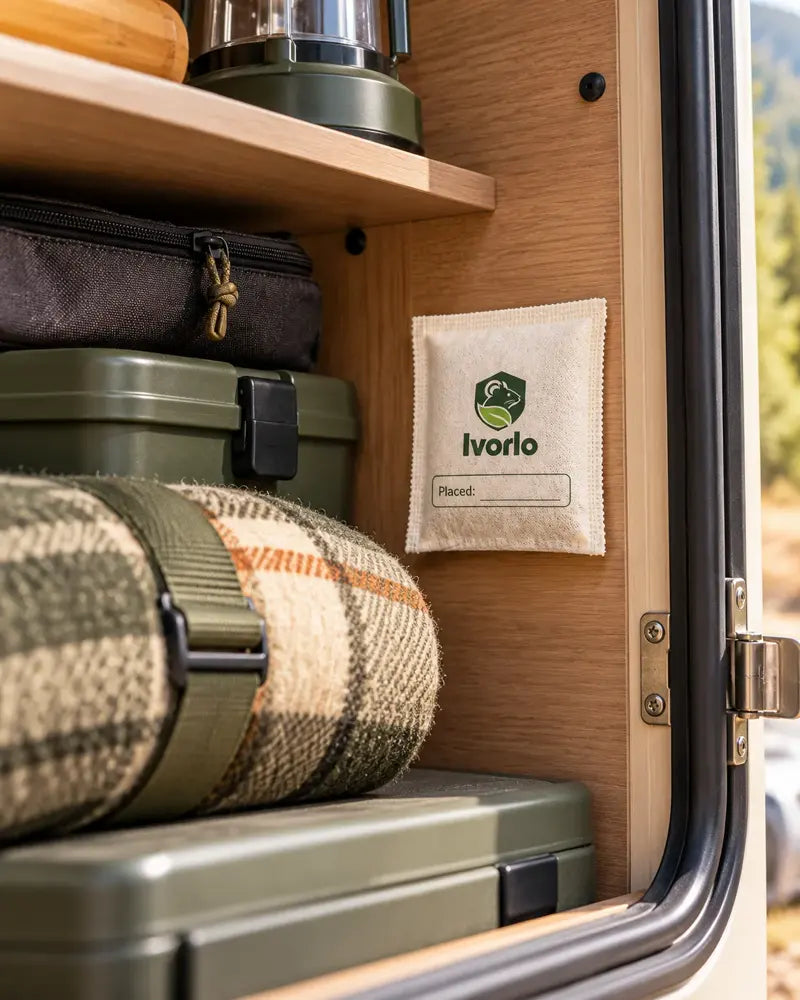
Camper, travel trailer or motorhome
This is where pouches do their best work. A stored camper is closed up, still and dark for months, so the scent hangs around and lasts.
Put them
- Inside the kitchen cabinets and under the sink, where the plumbing comes through the floor
- Under the mattress platform or dinette seats
- In each outside storage bay
- Near the furnace and water heater access panels, which are common ways in
Also do this
- Take out all food, including dry goods. A sealed box of cereal still smells like food to a mouse.
- Check where hoses and wires enter the floor and fill gaps with copper mesh or foam.
- Swap at 30 days. If the camper's stored somewhere you can't reach monthly, set it up with fresh pouches right before you leave it and again at your first visit.
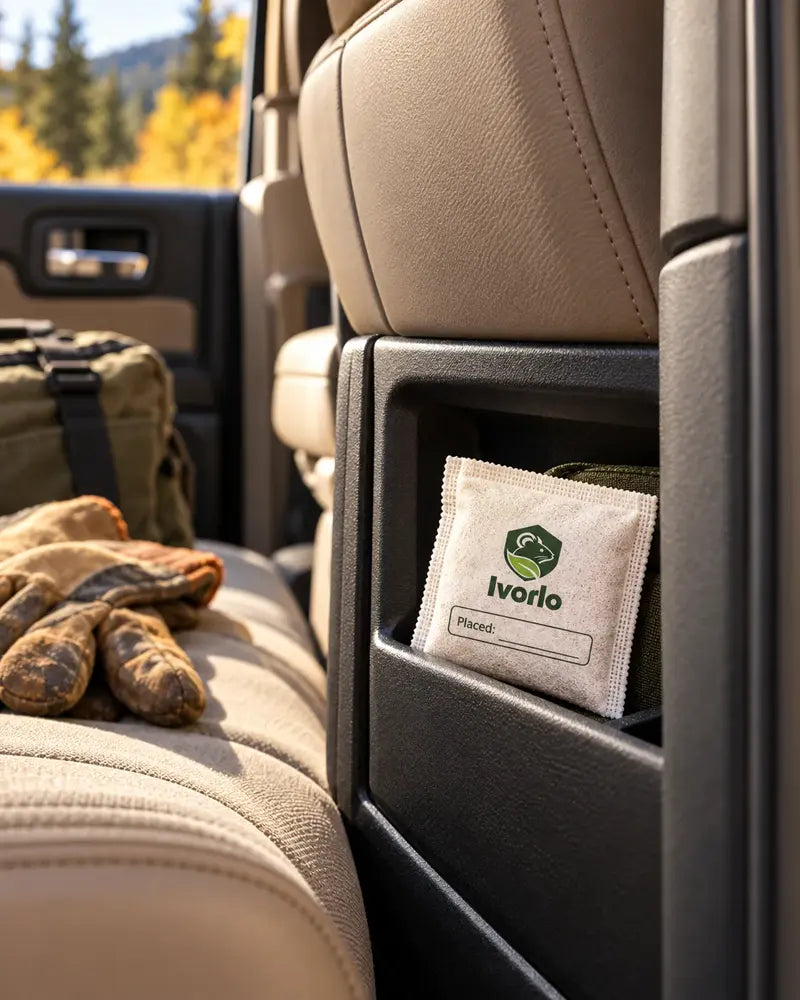
Car, truck or SUV
Mice like parked cars for the same reason they like campers: it's sheltered, it's quiet, and there's often a crumb or two. The expensive damage happens to wiring, so the goal is to make the car a place they don't bother nesting.
Put them
- On the cab floor, under a front seat
- In the trunk, or the frunk on an EV
- Near the cabin air intake, usually below the windshield at the base of the hood, if you can do it without blocking airflow
About the engine bay
Heat burns through the oil fast, so a pouch under the hood of a car you drive daily won't last much more than a week or two. On a car in storage, the engine stays cold and a pouch there lasts a lot longer. Keep it away from belts, fans and the exhaust, and take it out before you start the engine.
Also do this
- Clear out food wrappers and anything that smells like food.
- If you can, park away from tall grass, woodpiles and bird feeders.
- A car that gets driven every day rarely gets nested in. Stored and rarely driven cars are the ones at risk.
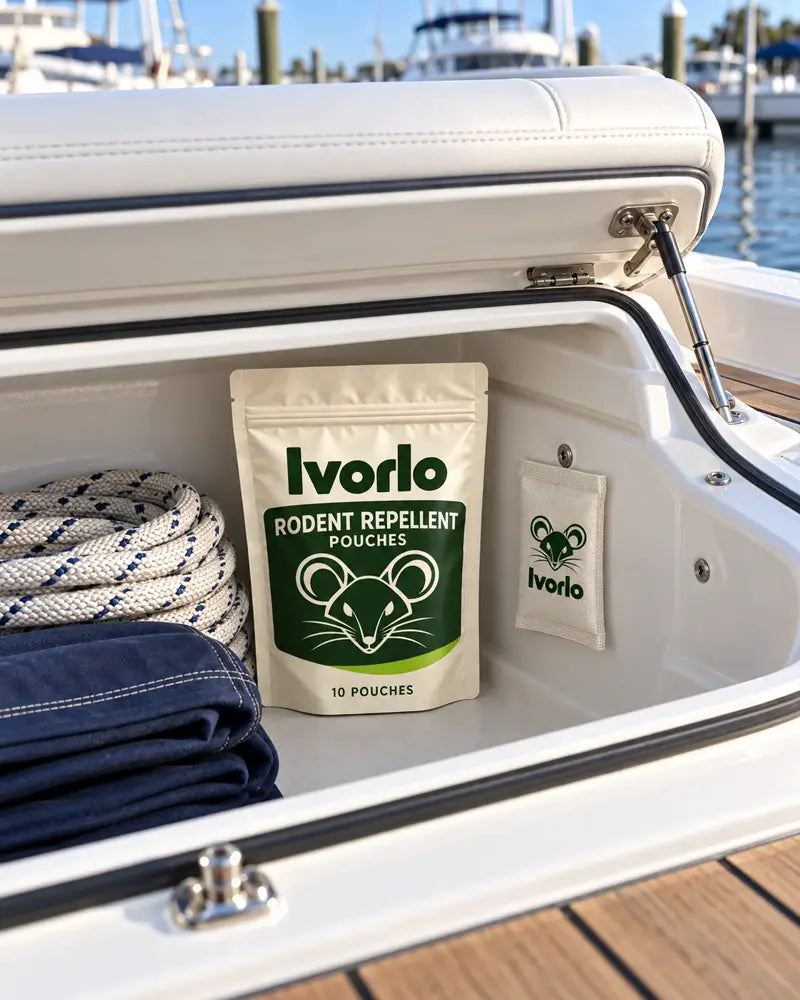
Boat in winter storage
A covered boat is close to ideal for pouches. Still air under a cover or shrink wrap holds the scent in.
Put them
- In the console or helm, near the wiring
- In the cabin or cuddy, and in any storage lockers with cushions
- Near where the cover meets the hull, if there's a gap mice could use
Also do this
- Take cushions, life jackets and anything soft home if you can. Mice love nesting material.
- If the boat's shrink wrapped and you can't get in monthly, use extra pouches when you wrap it. Ask your marina about a mid winter check.
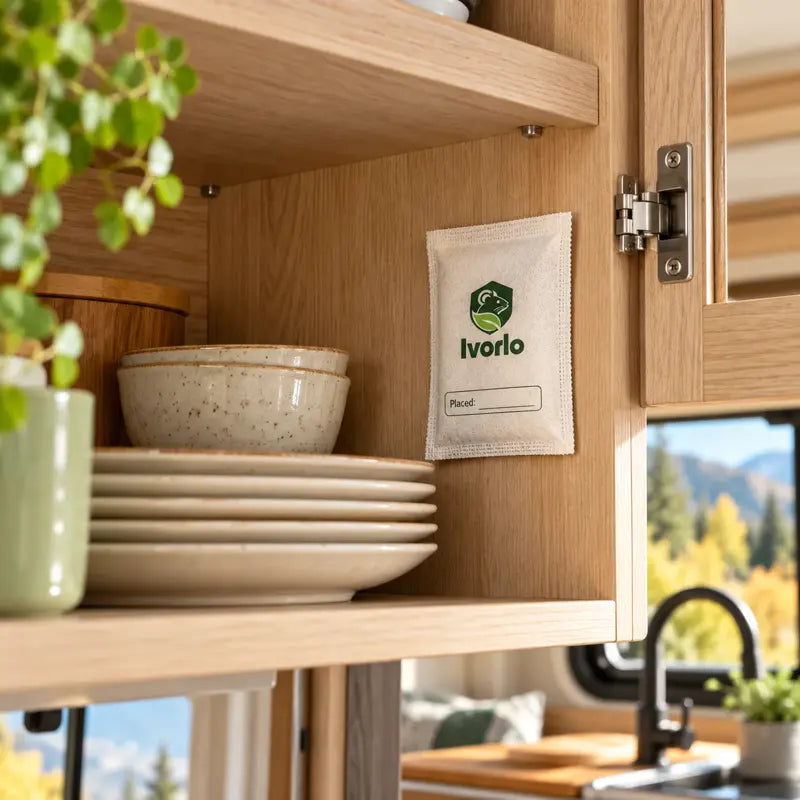
Cabin or second home
An empty cabin is quiet for weeks, which is exactly what mice are looking for. Focus on closed spaces, not open rooms.
Put them
- Kitchen cupboards, the pantry and under the sink
- Linen closets and drawers with blankets or clothes
- Behind the fridge and stove
Store bedding and clothes in sealed plastic tubs rather than open shelves. Put fresh pouches out every time you visit.
See kits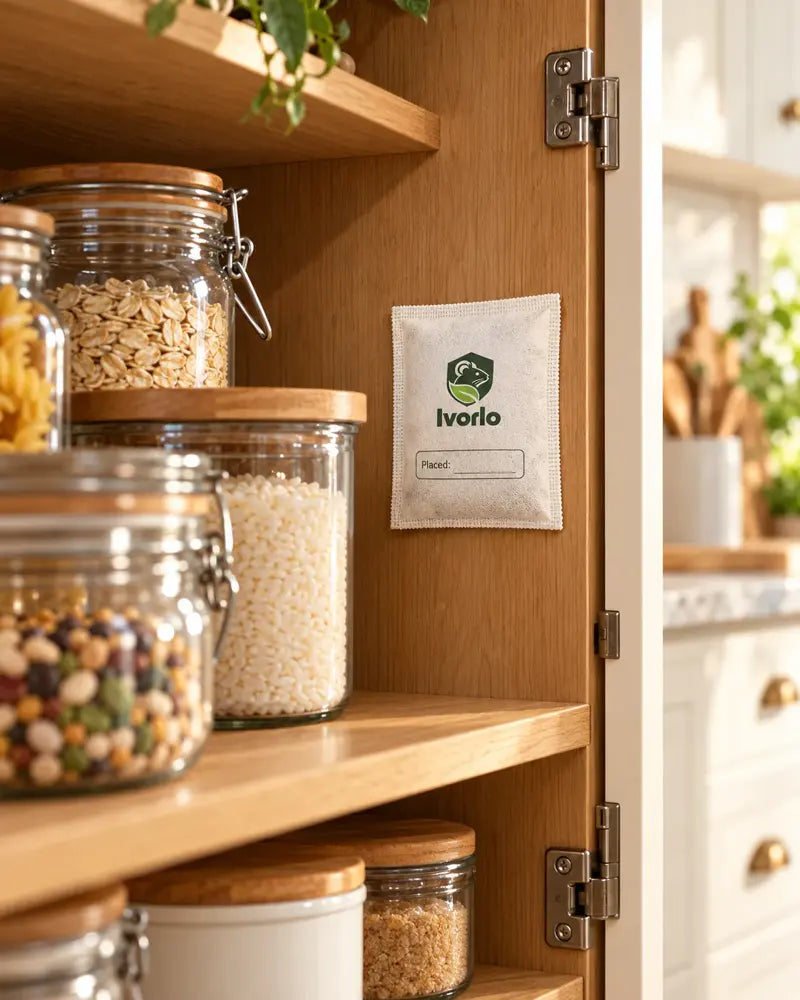
Kitchen and pantry
Pouches work well here to keep mice from settling in. If you're already finding fresh droppings every morning, read the "already have mice" plan below first.
Put them
- The back corner of the pantry floor or bottom shelf
- Under the sink, near where pipes come through the wall
- Behind or beside the fridge and stove
Keep pouches out of food containers and away from anything you eat. Move dry goods into hard sealed containers. And if you've got pets, keep pouches up and inside cabinets, not on an open floor.
Home kits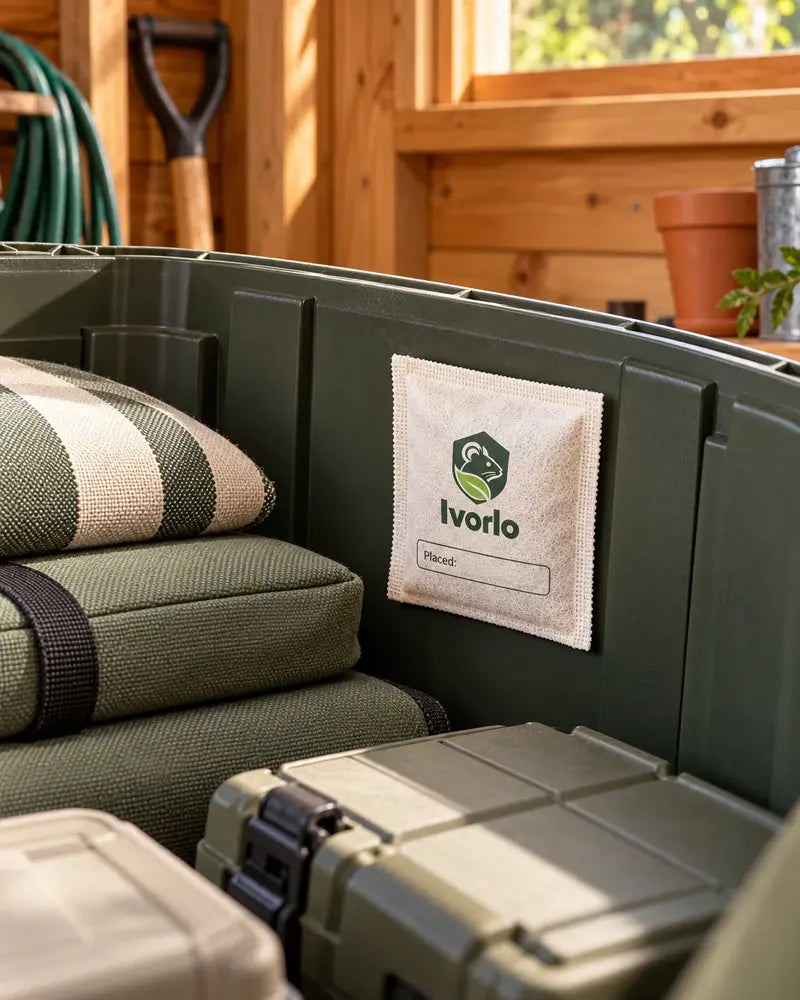
Garage and shed
Be honest with yourself here. A drafty garage with the door going up and down all day is too open for a pouch to hold a scent. What pouches can protect is everything closed inside it.
Put them
- Inside tool chests and cabinets
- In storage bins with holiday decorations, camping gear or clothing
- Under a stored mower or snowblower seat, under its cover
For the garage itself, a good door sweep and sealing the gap at the bottom of the door does more than anything you can buy.
Home kits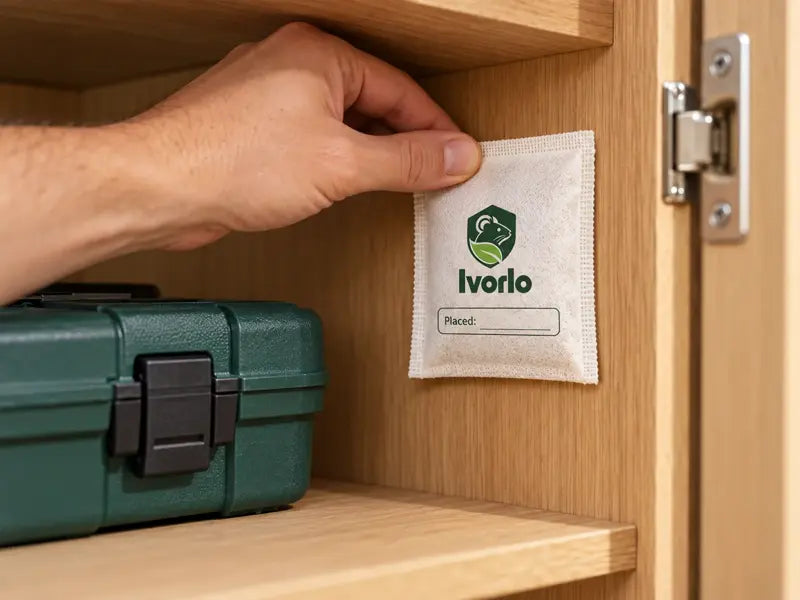
Basement, attic or crawlspace
These are the hardest spaces for any repellent. They're big, they often have airflow, and they're where mice already live in a lot of older homes. Pouches help once the gaps are sealed. Before that, they won't do much.
Put them
- Along the walls where the foundation meets the frame
- Near where pipes, wires and vents come through
- In closed storage areas rather than the middle of the room
If you hear scratching in the walls or ceiling, that's an active problem. Get it cleared first, by trapping or a pest control visit, then use pouches to keep it from coming back.
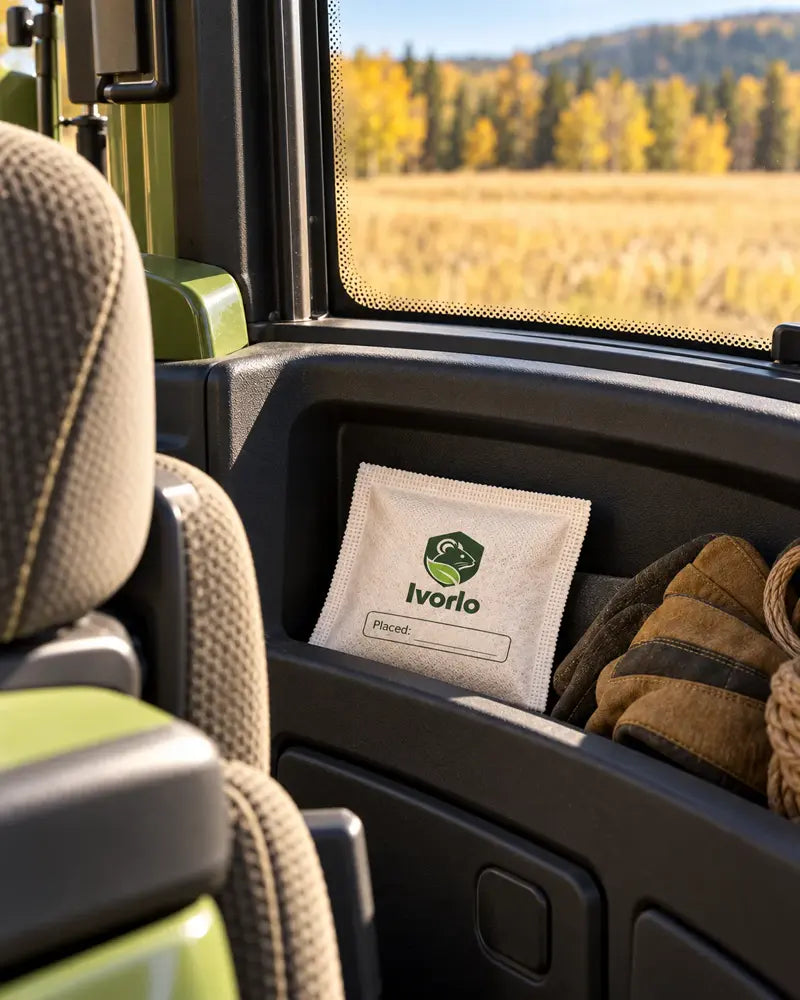
Tractor cab, shop and feed room
Cabs and closed rooms, yes. An open barn, no. A harness repair costs more than a few seasons of pouches, so the cab is where they earn their keep.
Put them
- On the cab floor and behind the seat of tractors, combines and skid steers
- Under ATV and mower seats
- In tack rooms, tool cribs and feed rooms that have doors, with feed kept in metal bins
The rules that apply everywhere
Put them out early
Pouches keep a space from being chosen. Put them out in early fall, before the first hard freeze, when mice start looking.
Closed beats open
Still air holds the scent. Cabinets, cabs and covered storage are ideal. Breezy, open spaces use pouches up fast.
Enough of them
One pouch per small space. A single pouch in a big room is the most common reason people find droppings next to one.
Stuck, not loose
Use the adhesive dots. A loose pouch on the floor gets pushed aside or chewed. Up on a wall or inside a cabinet it stays where you need it.
Date it and swap at 30
Write the date on each pouch. When you can't smell it, swap it, even if it hasn't been 30 days.
Seal what you can
Mice fit through gaps the width of a pencil. Steel wool or copper mesh in the gaps does a lot of the work for you.
Already have mice? Clear them first.
If you see fresh droppings daily or hear scratching in a wall, mice are nesting there now. Pouches alone won't move them. Seal the way in, trap for a week or two until the fresh droppings stop, clean out the old droppings and nest (gloves on, wet it down first instead of sweeping it dry), and then put pouches out so the space isn't chosen again. For a big problem, call pest control and use pouches as the follow up.
Keep them away from pets, kids and food
No poison bait, but they're still concentrated oils. Keep pouches in cabinets, vehicles, storage and up high. Not in food containers, not on a playroom floor, not where a dog can chew one open. Wash your hands after handling them.